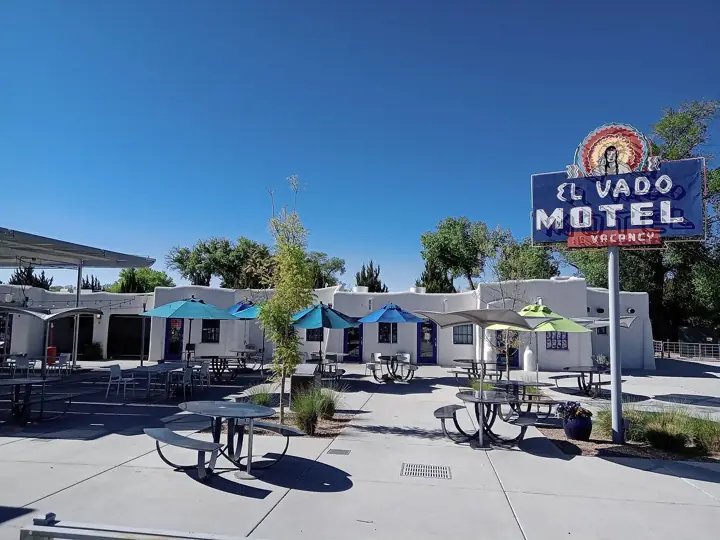
Recently restored 1937-era motor court showcasing the golden age of Route 66 lodging with modern amenities.
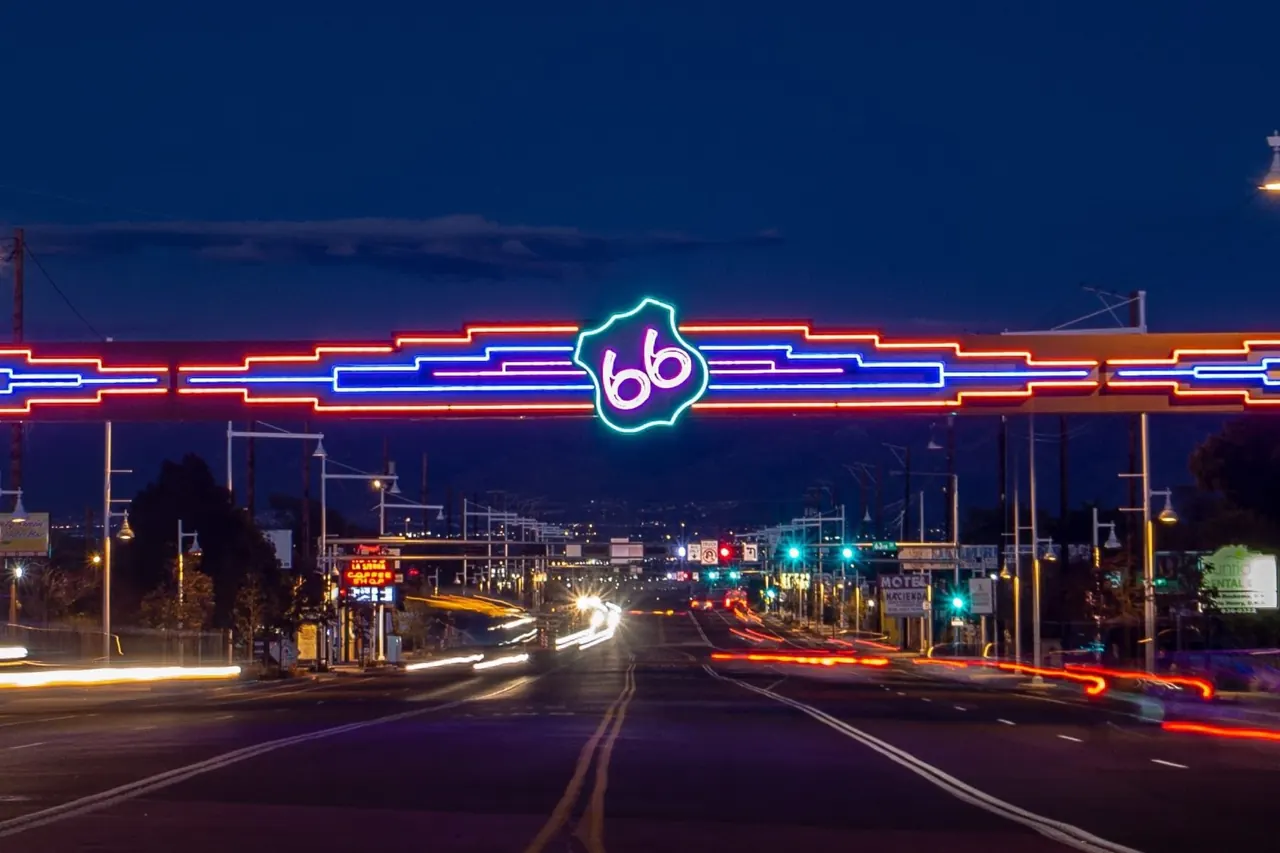
Neon gateway arch across Central Ave in Nob Hill, one of two the city installed in 1993.
Central Avenue became part of Route 66 in 1937, when the highway was straightened to cross Albuquerque from east to west. Nob Hill, then a young suburb a few miles east of downtown, filled in with motels, shops and neon along the new road. In 1993 the City of Albuquerque put up decorative neon arches spanning Central Avenue to mark where the Nob Hill district starts and ends. They are not relics of the highway years but a later nod to them, built as part of the effort to keep the neighborhood's neon character alive.
The arch is a neon-trimmed gateway over Central Avenue at the western edge of Nob Hill, near Girard Boulevard and the University of New Mexico; a matching one stands at the far end of the district. Between the two runs about a mile of shops, restaurants and older neon signs that you can walk or drive. The arches are at their best after sunset, when the tubing is lit above the traffic.
Hours, prices and access change. Confirm with the venue before you go. Details last checked October 2026. More Route 66 stops in Albuquerque, NM.
From people who've been.
The stops on either side of this one, in driving order from Chicago to Santa Monica.
Recently restored 1937-era motor court showcasing the golden age of Route 66 lodging with modern amenities.
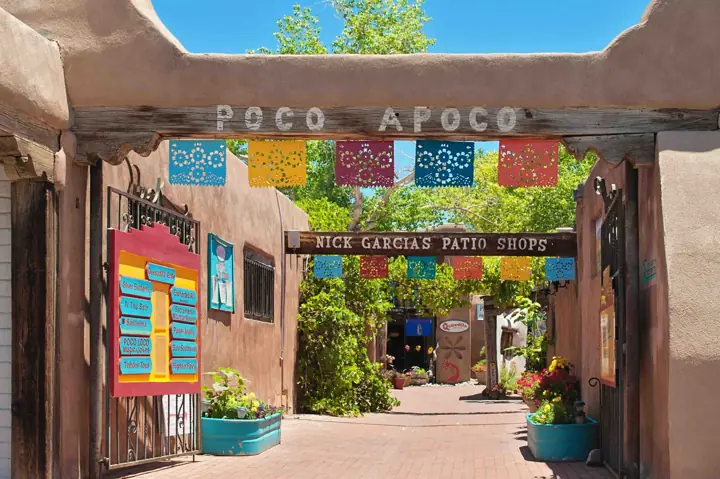
Pre-dates Route 66 but worth the detour for its historic plaza, adobe architecture, and cultural attractions.
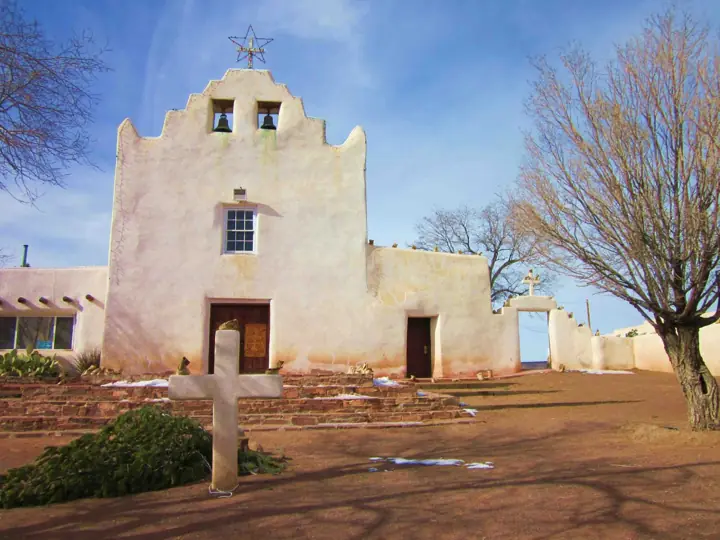
Historic adobe church from 1699, representing centuries of Native American and Spanish colonial heritage.
Itineraries, roadside gems, and site updates — no spam.