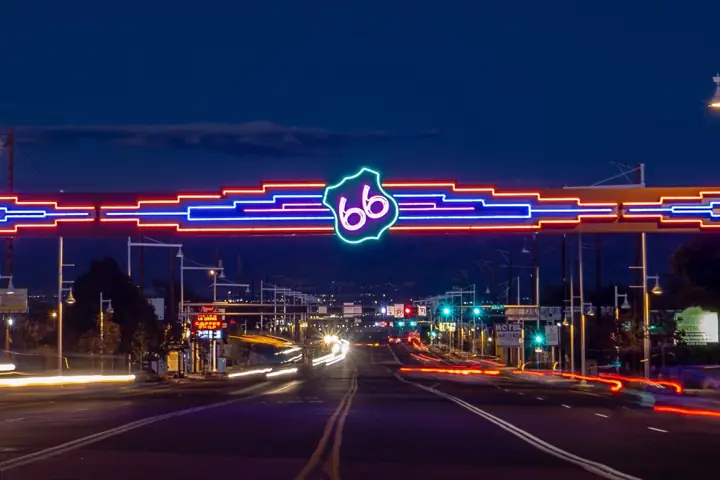
Neon gateway arch across Central Ave in Nob Hill, one of two the city installed in 1993.
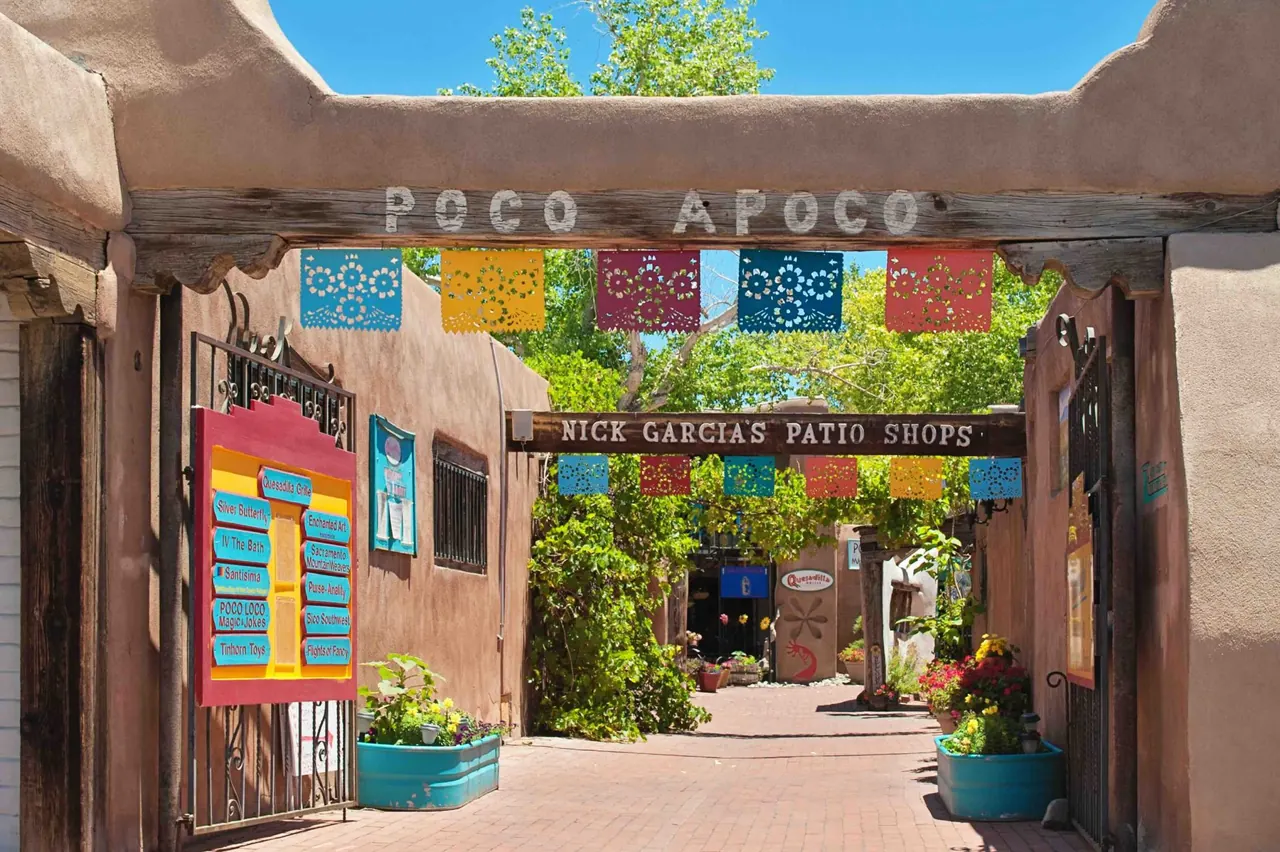
Pre-dates Route 66 but worth the detour for its historic plaza, adobe architecture, and cultural attractions.
Old Town is where Albuquerque began. Francisco Cuervo y Valdes, governor of Spanish New Mexico, founded the settlement in 1706, and it grew around a plaza in the usual colonial pattern. San Felipe de Neri Church, on the plaza's north side, dates to 1793 and replaced an earlier church that collapsed. When the railroad arrived in 1880 its depot went in about two miles east, a new town grew up there, and the old one faded. Old Town was annexed by the city in 1949 and is now a protected historic district. Central Avenue, the later Route 66, runs along its southern edge.
You'll find the plaza, the old church on its north side, and roughly ten blocks of low adobe buildings with long front porches, mixed with a few Victorian-era ones. More than 100 shops, galleries and restaurants fill the lanes and courtyards. The Albuquerque Museum is in Old Town, and the New Mexico Museum of Natural History and Science and the Explora science center are a short walk northeast.
Hours, prices and access change. Confirm with the venue before you go. Details last checked October 2026. More Route 66 stops in Albuquerque, NM.
From people who've been.
The stops on either side of this one, in driving order from Chicago to Santa Monica.
Neon gateway arch across Central Ave in Nob Hill, one of two the city installed in 1993.
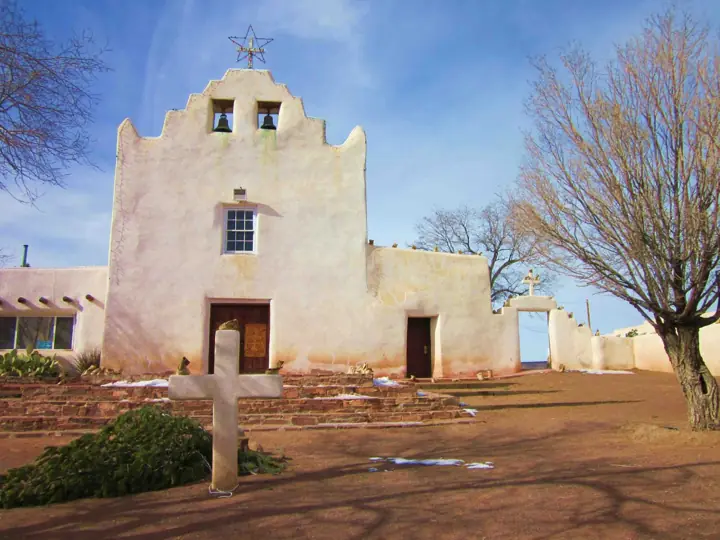
Historic adobe church from 1699, representing centuries of Native American and Spanish colonial heritage.
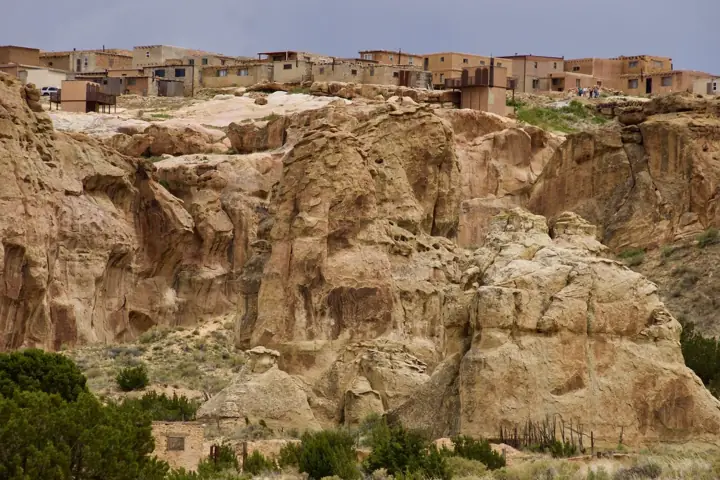
One of the oldest continuously inhabited communities in North America. Tours available to this mesa-top village.
Itineraries, roadside gems, and site updates — no spam.