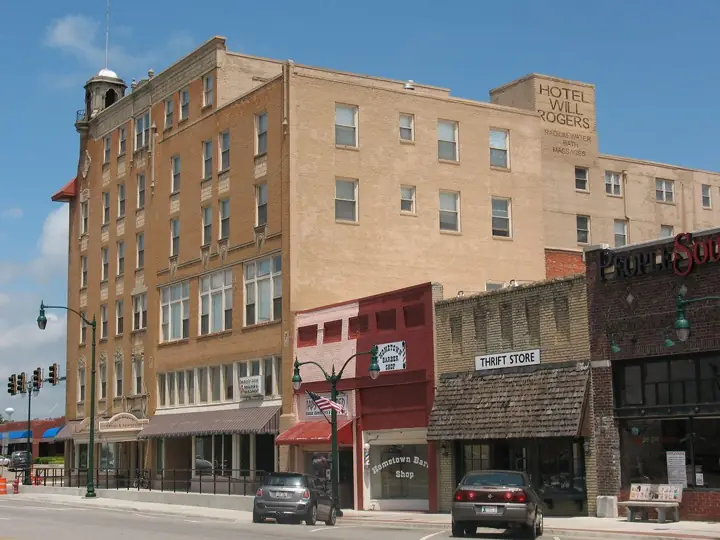
Built in 1930 in Spanish Mission style with a prominent bell tower, the former Will Rogers Hotel now houses apartments.
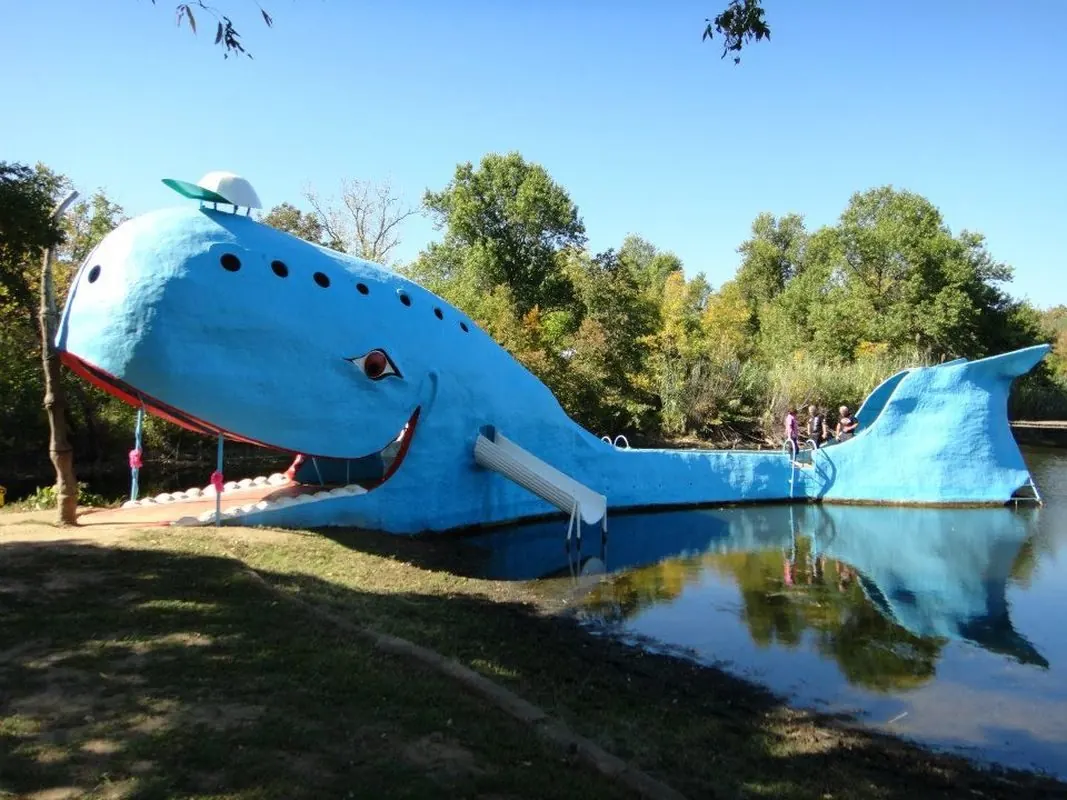
One of Route 66's most iconic photo stops, a giant blue whale sculpture built in the 1970s.
Zoologist Hugh S. Davis built the Blue Whale beside his family's pond as an anniversary gift, working with his friend Harold Thomas for two years on a welded metal frame coated with hand-mixed cement. Finished in July 1972, the smiling whale is 80 feet long and 20 feet tall, and it soon became a public swimming hole for locals and Route 66 travelers. The attraction closed around 1988 and fell into disrepair until local restoration efforts brought it back. The City of Catoosa bought the property in 2021 and, with a $1.8 million state Route 66 grant, added a visitor center that opened in 2026.
You can walk out along the whale's body, step through its open mouth and peer from the portholes over the pond. Swimming is no longer permitted, but picnicking, fishing and feeding the turtles are all part of a visit. The new 4,000-square-foot visitor center, topped with a neon sign, holds a gift shop and historical exhibits, with improved paths leading down to the whale.
Hours, prices and access change. Confirm with the venue before you go. Details last checked October 2026. More Route 66 stops in Catoosa, OK.
From people who've been.
The stops on either side of this one, in driving order from Chicago to Santa Monica.
Built in 1930 in Spanish Mission style with a prominent bell tower, the former Will Rogers Hotel now houses apartments.
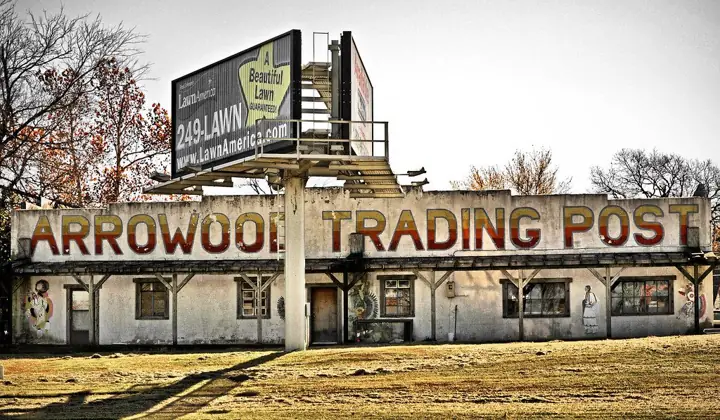
Classic roadside stop from the 50s, now atmospheric ruins that evoke Route 66's golden era.
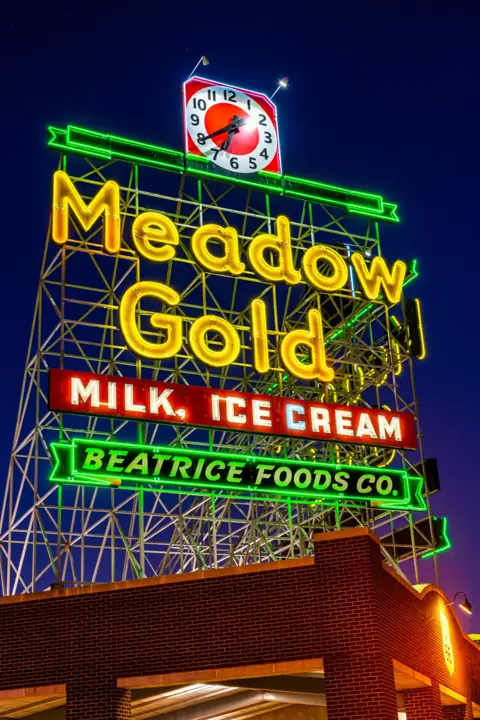
Restored neon sign on a brick base, representing classic Route 66 advertising and roadside culture.
Itineraries, roadside gems, and site updates — no spam.