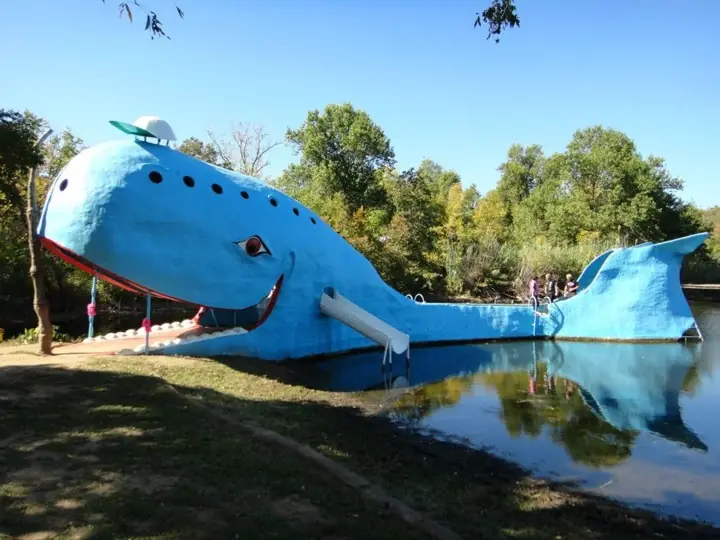
One of Route 66's most iconic photo stops, a giant blue whale sculpture built in the 1970s.
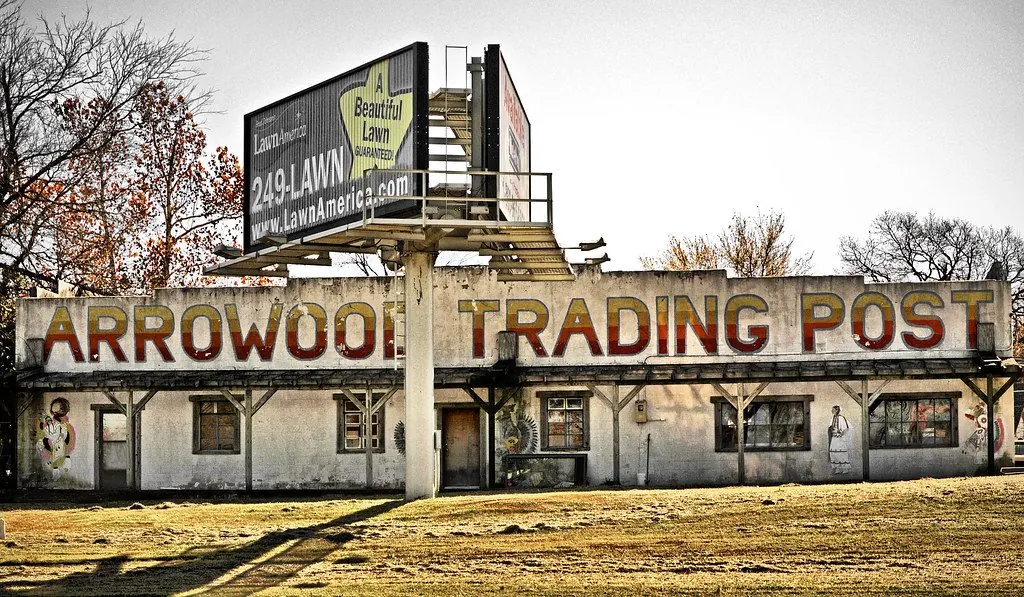
Classic roadside stop from the 50s, now atmospheric ruins that evoke Route 66's golden era.
Chief Wolf Robe Hunt, an Acoma artist and silversmith who already ran a shop in Tulsa, opened an Indian trading post here in the early 1950s, selling Native American art, jewelry and pottery. In the middle of that decade he partnered briefly with Hugh Davis, who would later build the Blue Whale across the road; the business became the Catoosa Indian Trading Post and gained Phillips 66 pumps and a cafe. It went quiet after Hunt died in 1977. In 1990 the building reopened as the Arrowood Trading Post, a gift and souvenir shop, which lasted until the late 1990s.
The roadside building remains, with its front turned toward the original 1926 alignment and its back to the present highway. It was converted to an auto repair shop in 2011 and has been reported vacant more recently, so there is nothing to go inside for. It is best appreciated as a companion to the Blue Whale: a surviving piece of the roadside strip that once kept families here for an afternoon.
Hours, prices and access change. Confirm with the venue before you go. Details last checked October 2026. More Route 66 stops in Catoosa, OK.
From people who've been.
The stops on either side of this one, in driving order from Chicago to Santa Monica.
One of Route 66's most iconic photo stops, a giant blue whale sculpture built in the 1970s.
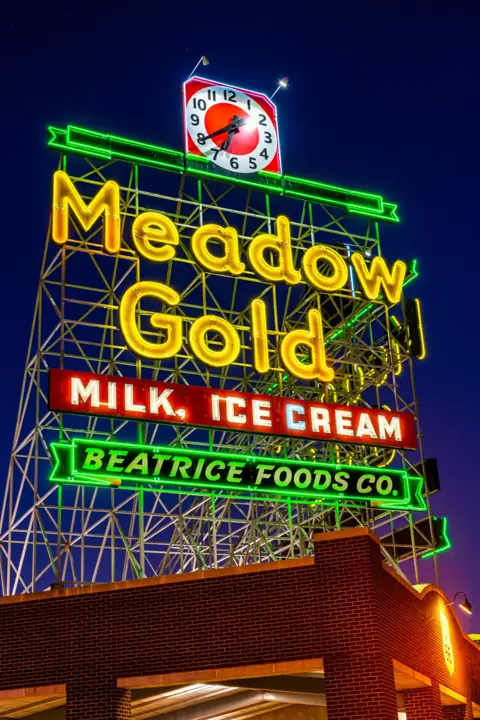
Restored neon sign on a brick base, representing classic Route 66 advertising and roadside culture.
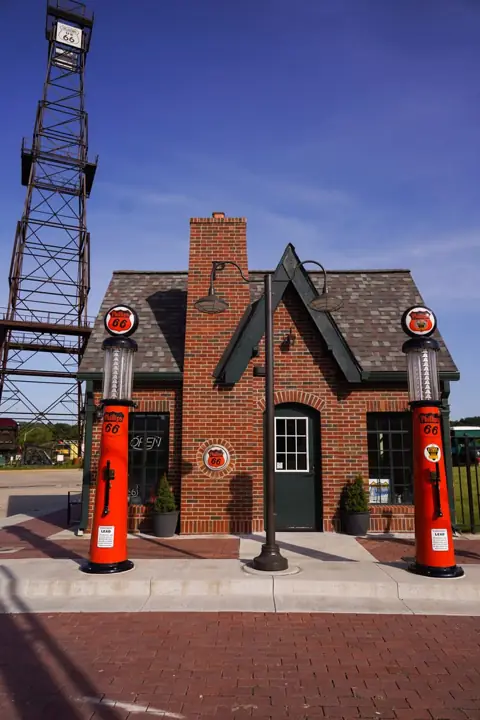
Replica oil derrick, train car, depot, and more showcasing Oklahoma's oil boom and Route 66 heritage.
Itineraries, roadside gems, and site updates — no spam.