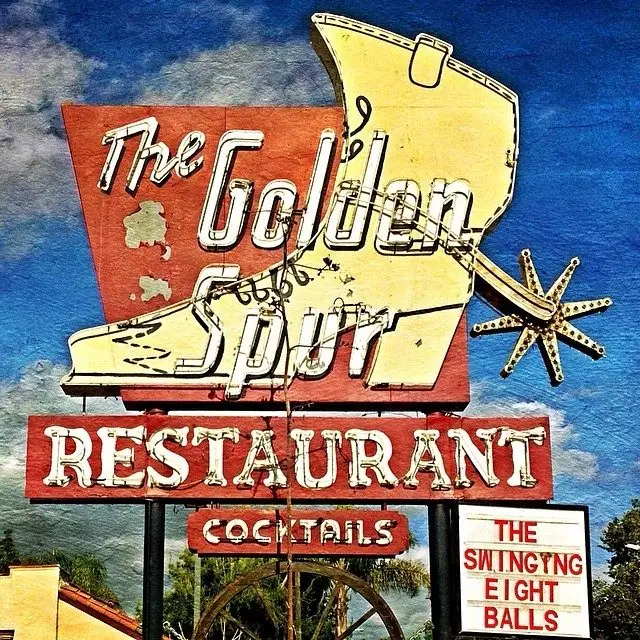
A classic SoCal fast-food deli chain, widely known for its “World Famous Pastrami” sandwiches and chili cheese fries.
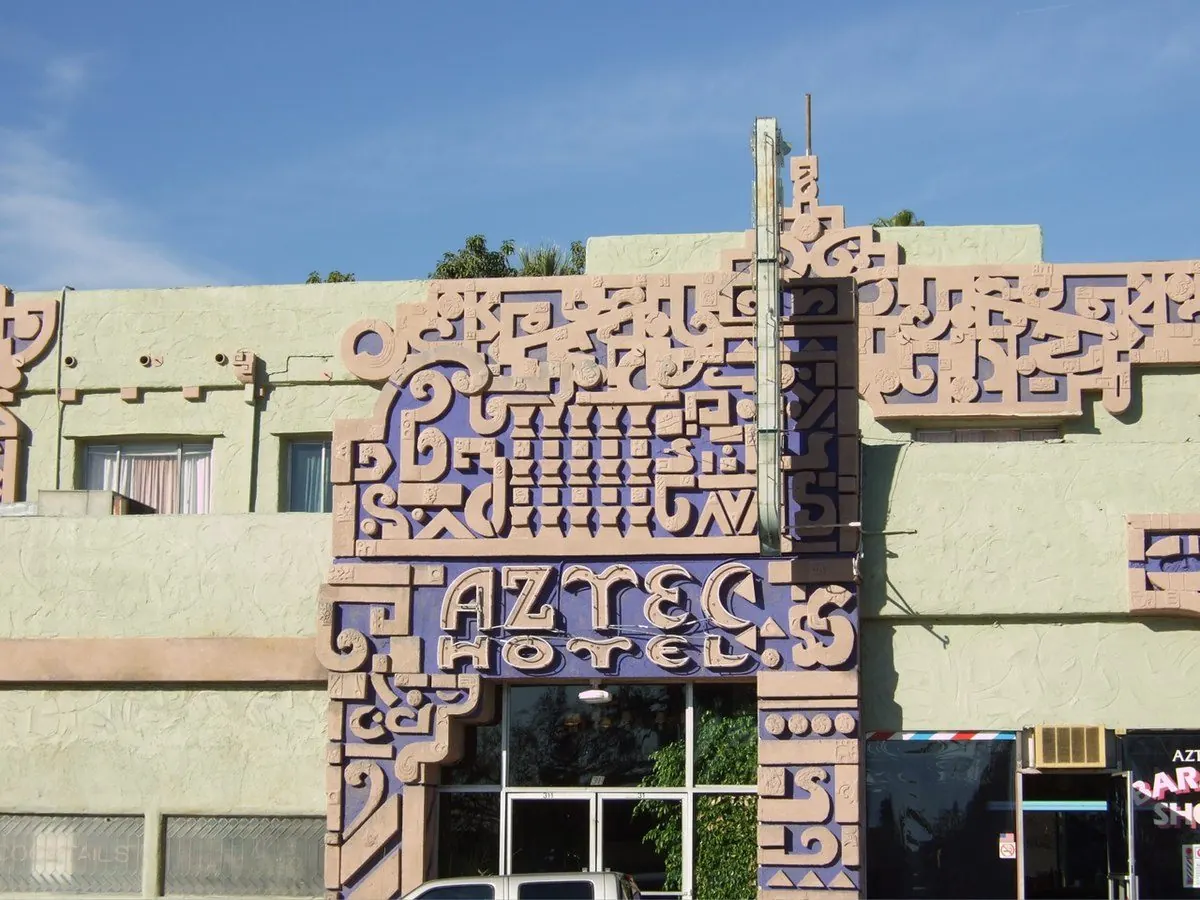
Mayan Revival architecture showcasing the exotic themes popular in 1920s roadside design.
The Aztec Hotel opened in 1925 as the grandest hotel in Monrovia, a year before Route 66 was designated along Foothill Boulevard in front of it. Architect Robert Stacy-Judd drew on Maya temples for the design, but called it Aztec because he thought the public knew that name better. It was the first major building in the country to use the style and set off a short-lived Mayan Revival fashion. The highway was rerouted to the south in the early 1930s, bypassing the hotel. It was added to the National Register of Historic Places in 1978, and restoration work began in 2000.
This is an exterior stop. The stucco facade is covered in carved-looking panels, stepped shapes, geometric bands and square spires modeled on Maya art, topped by the Aztec Hotel sign. It is a standing building, not a ruin, with 44 rooms inside along with the former Mayan Room restaurant, but the hotel is not open to the public, so plan on viewing and photographing it from the sidewalk.
Hours, prices and access change. Confirm with the venue before you go. Details last checked October 2026.
From people who've been.
The stops on either side of this one, in driving order from Chicago to Santa Monica.
A classic SoCal fast-food deli chain, widely known for its “World Famous Pastrami” sandwiches and chili cheese fries.
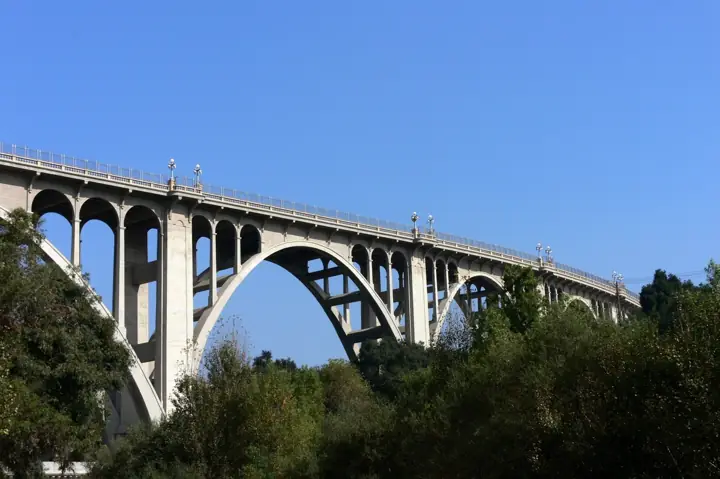
Iconic Beaux-Arts arch bridge (1913) representing the engineering marvels of the early automobile age.
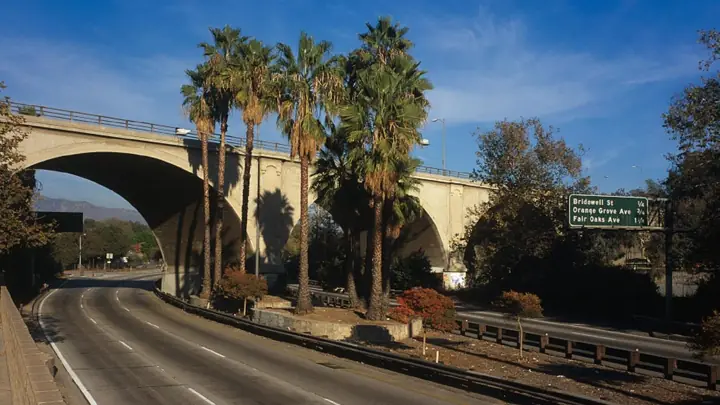
First freeway in the U.S., aligns with old Route 66, representing the evolution of American highways.
Itineraries, roadside gems, and site updates — no spam.