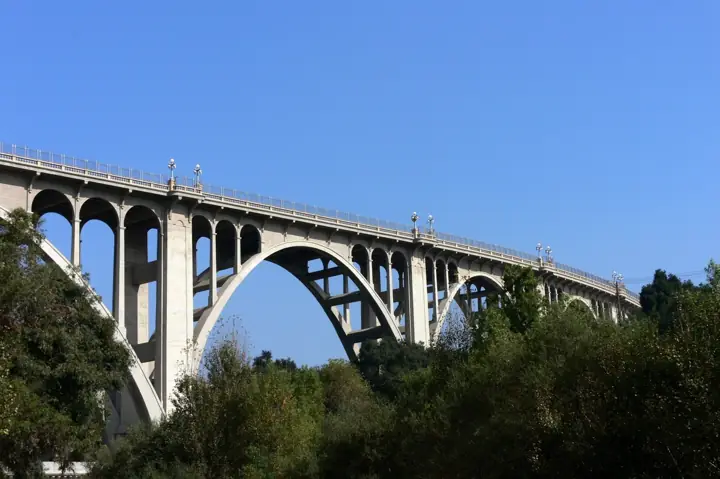
Iconic Beaux-Arts arch bridge (1913) representing the engineering marvels of the early automobile age.
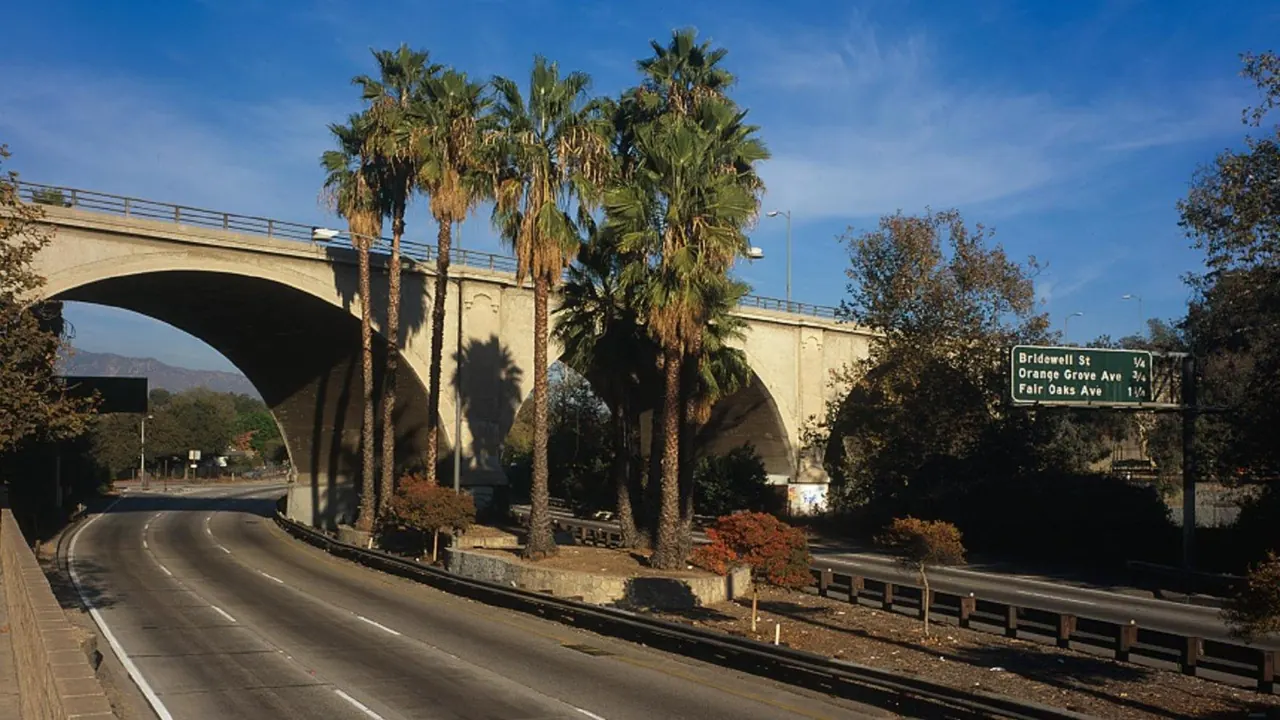
First freeway in the U.S., aligns with old Route 66, representing the evolution of American highways.
The Arroyo Seco Parkway opened in 1940 between Pasadena and downtown Los Angeles and is regarded as the first freeway in the West. Built along the course of the Arroyo Seco, it gave drivers a signal-free route and took Route 66 traffic off the crowded Colorado Street Bridge and the surface streets. From then until 1964 it was the main Route 66 alignment between the two cities. The 6.2-mile road runs from East Glenarm Street in Pasadena to the Four-Level Interchange, and it is a National Scenic Byway and National Civil Engineering Landmark, listed on the National Register of Historic Places in 2011.
This one is experienced from behind the wheel. The road, signed today as State Route 110, winds beside the arroyo through planted parkland, passes under a 750-foot Santa Fe railroad bridge, and runs through four Art Deco tunnels in Elysian Park, the only tunnels on all of Route 66. By modern standards the lanes are narrow, the curves tight and the on and off ramps very short, which is exactly what makes it feel like a piece of 1940.
Hours, prices and access change. Confirm with the venue before you go. Details last checked October 2026. More Route 66 stops in Los Angeles, CA.
From people who've been.
The stops on either side of this one, in driving order from Chicago to Santa Monica.
Iconic Beaux-Arts arch bridge (1913) representing the engineering marvels of the early automobile age.
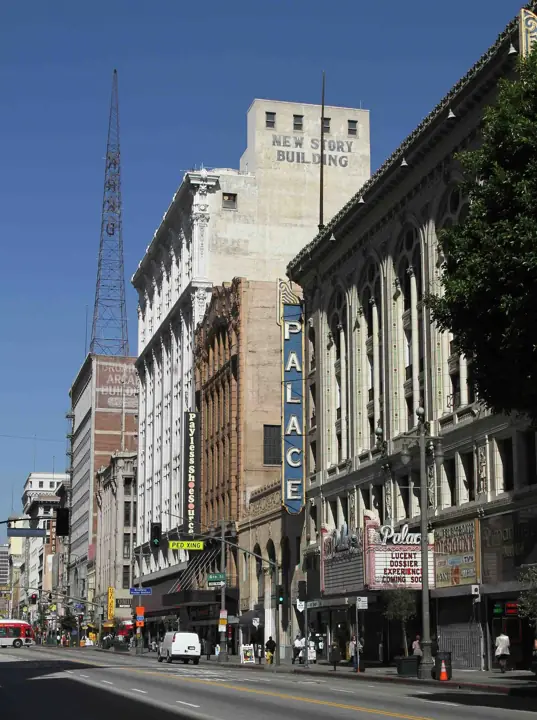
Vintage neon marquees and buildings representing the golden age of entertainment along Route 66.
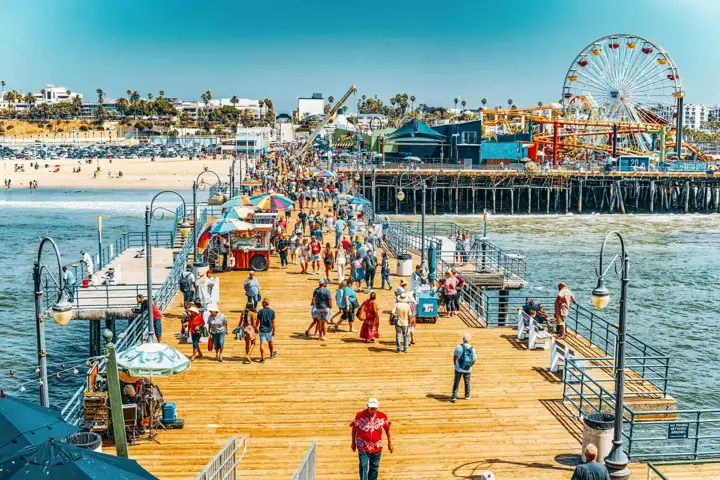
Iconic oceanfront landmark where Route 66 officially ends, featuring amusement rides and Pacific Ocean views.
Itineraries, roadside gems, and site updates — no spam.