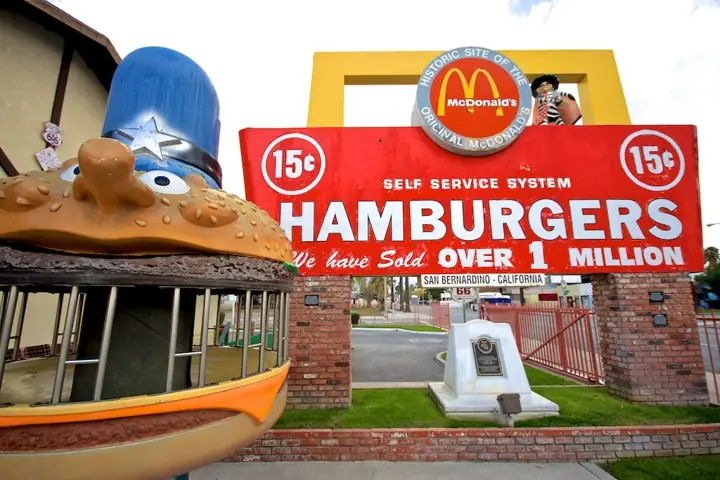
Built on the site of the first McDonald's (1940), showcasing the birth of fast food culture.
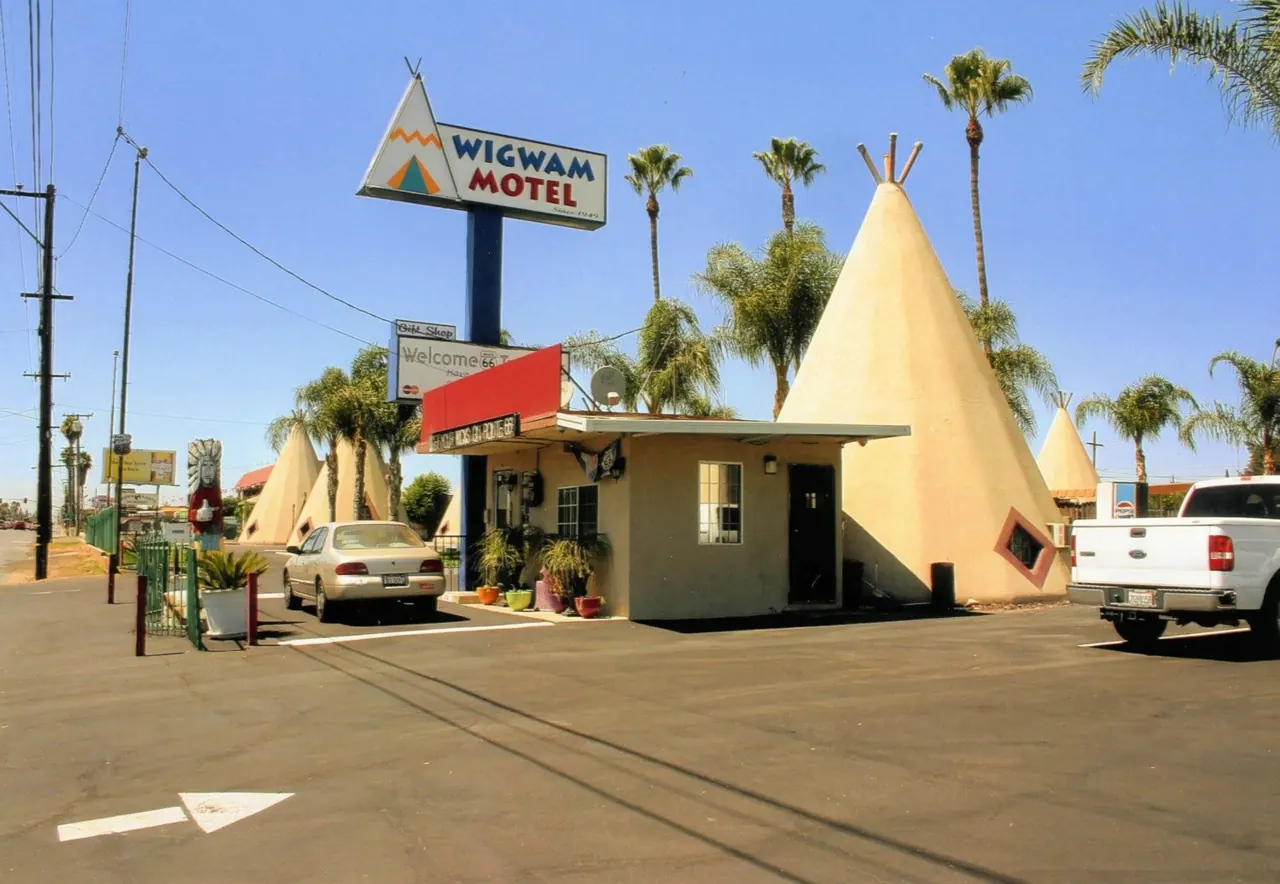
Another "sleep in a teepee" motor court, one of the last surviving wigwam motels on Route 66.
Frank Redford started building teepee-shaped tourist courts in the 1930s, an idea that grew out of a shop and museum for his collection of Native American artifacts. This one, built in 1949 on Foothill Boulevard at the San Bernardino-Rialto line, was the seventh and last of his Wigwam Villages. It began with 11 units and grew to 19 as highway traffic increased. After years of decline, the Patel family bought the motel in the early 2000s and restored it. It was added to the National Register of Historic Places in 2012 and is one of only three Wigwam Villages left.
Nineteen white stucco wigwams, each about 32 feet tall, stand in an arc around a lawn and a kidney-shaped swimming pool. Each one is a private motel room with its own bath. Guests get the full experience of sleeping in one, but if you are only passing through you can still photograph the cones and the sign from the front of the property.
Hours, prices and access change. Confirm with the venue before you go. Details last checked October 2026. More Route 66 stops in San Bernardino, CA.
From people who've been.
The stops on either side of this one, in driving order from Chicago to Santa Monica.
Built on the site of the first McDonald's (1940), showcasing the birth of fast food culture.
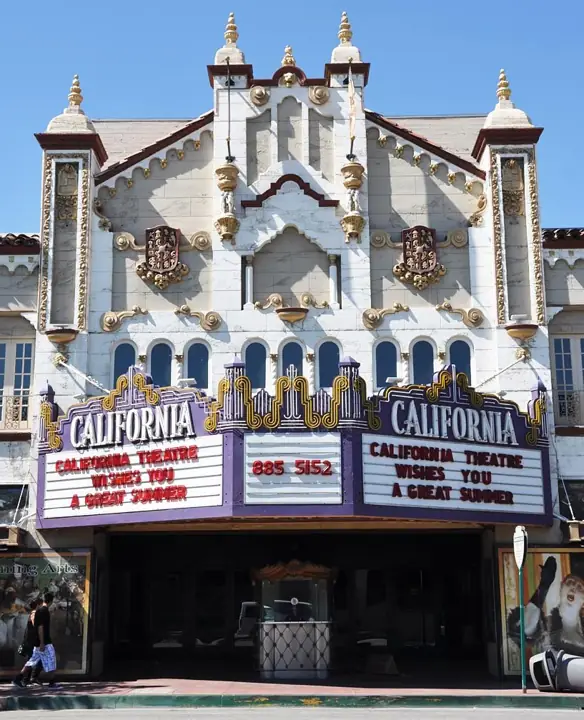
Built in 1928, showcasing the entertainment culture that flourished along Route 66.
Route 66 items included in exhibits showcasing local history and highway heritage.
Itineraries, roadside gems, and site updates — no spam.