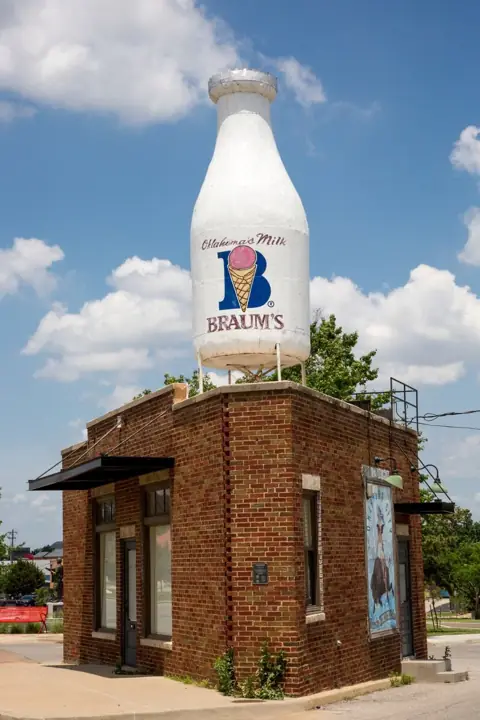
Tiny wedge-shaped building with a giant milk bottle on top, an iconic piece of roadside architecture.
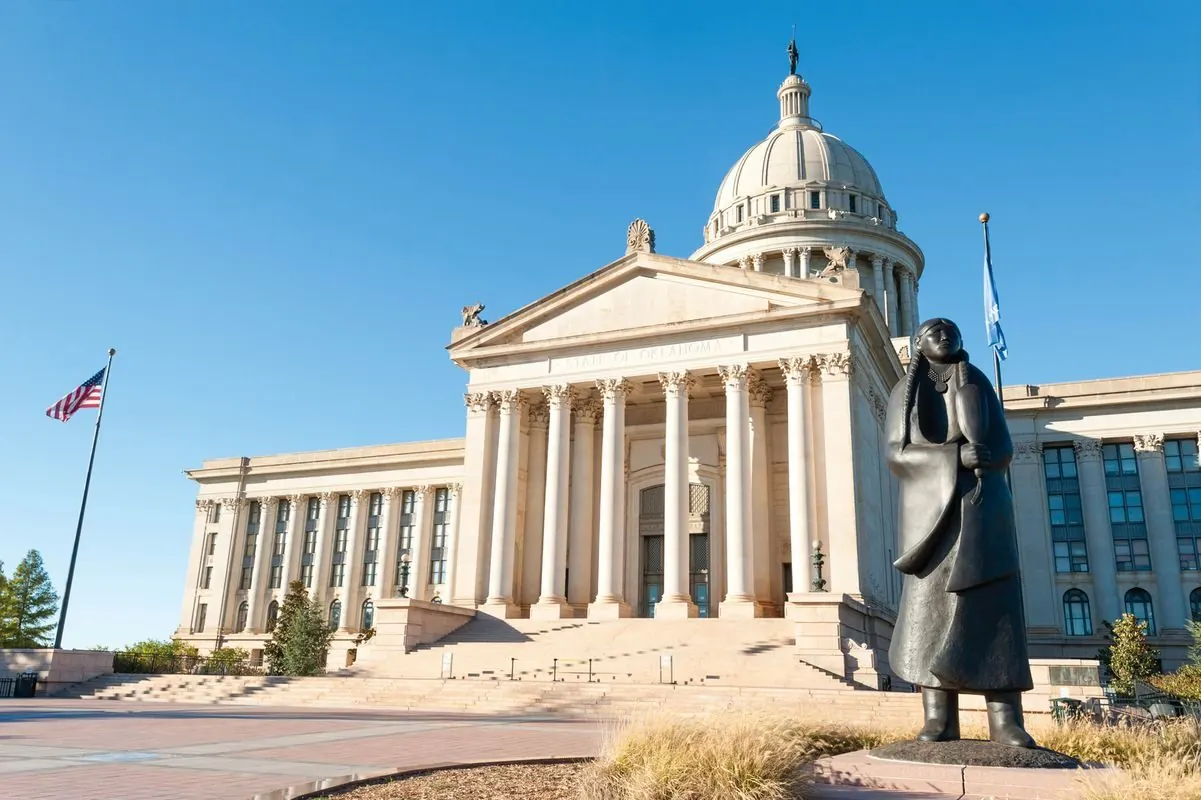
Accessible via 66 bypass, featuring the only state capitol with working oil wells on its grounds.
Oklahoma's capitol was built between 1914 and 1917 to a design by architects Solomon Layton and S. Wemyss-Smith. A dome was part of the plan but was cut to save money, and the building stood without one until 2001-2002, when the dome was finally added and crowned with The Guardian, a 22-foot bronze of an American Indian figure. The capitol sits on top of the Oklahoma City Oil Field, and its grounds are known as the only state capitol complex with oil rigs. Route 66 followed Lincoln Boulevard past the building on one of its Oklahoma City alignments.
Enter through the south entrance, pass security, and you can wander six floors hung with hundreds of paintings, murals and sculptures from state collections, as well as the rotunda beneath the dome. Free guided tours last about 45 minutes, or you can explore on your own. Outside, look for the oil derrick on the grounds and the statue on top of the dome.
Hours, prices and access change. Confirm with the venue before you go. Details last checked October 2026. More Route 66 stops in Oklahoma City, OK.
From people who've been.
The stops on either side of this one, in driving order from Chicago to Santa Monica.
Tiny wedge-shaped building with a giant milk bottle on top, an iconic piece of roadside architecture.
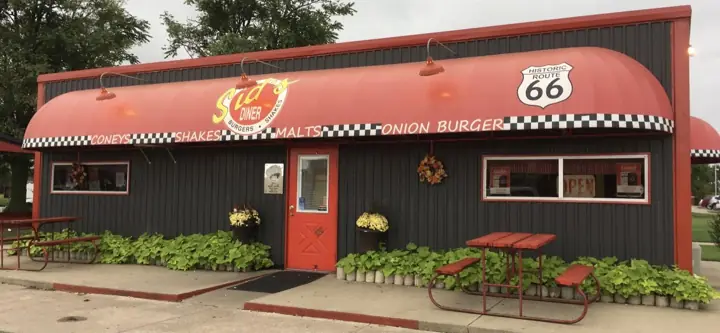
Home of the fried-onion burger, a local culinary tradition that started during the Great Depression.
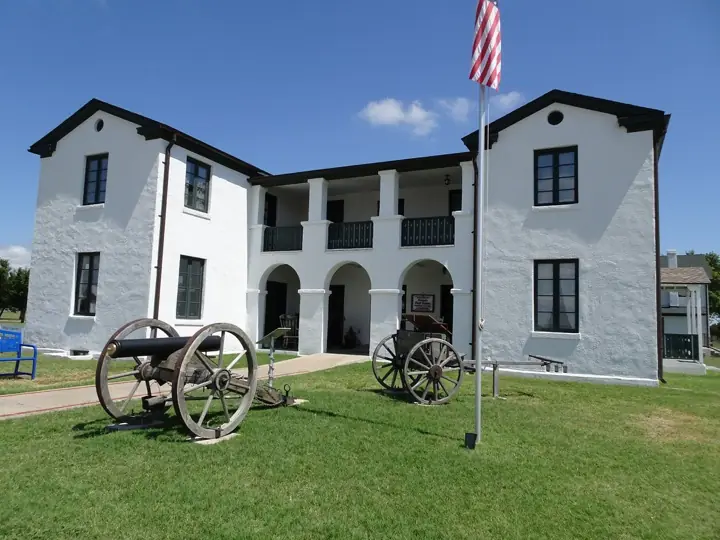
Historic Army post and cemetery with WWII German POW camp, showcasing military history.
Itineraries, roadside gems, and site updates — no spam.