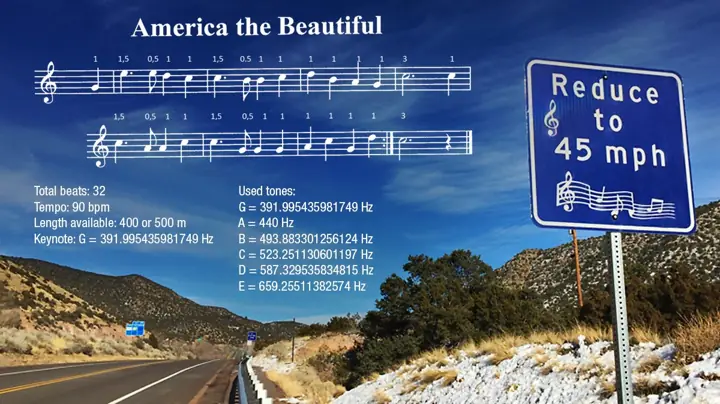
A stretch built to play "America the Beautiful" when driven over at 45 mph. The tune has been fading and may no longer play.
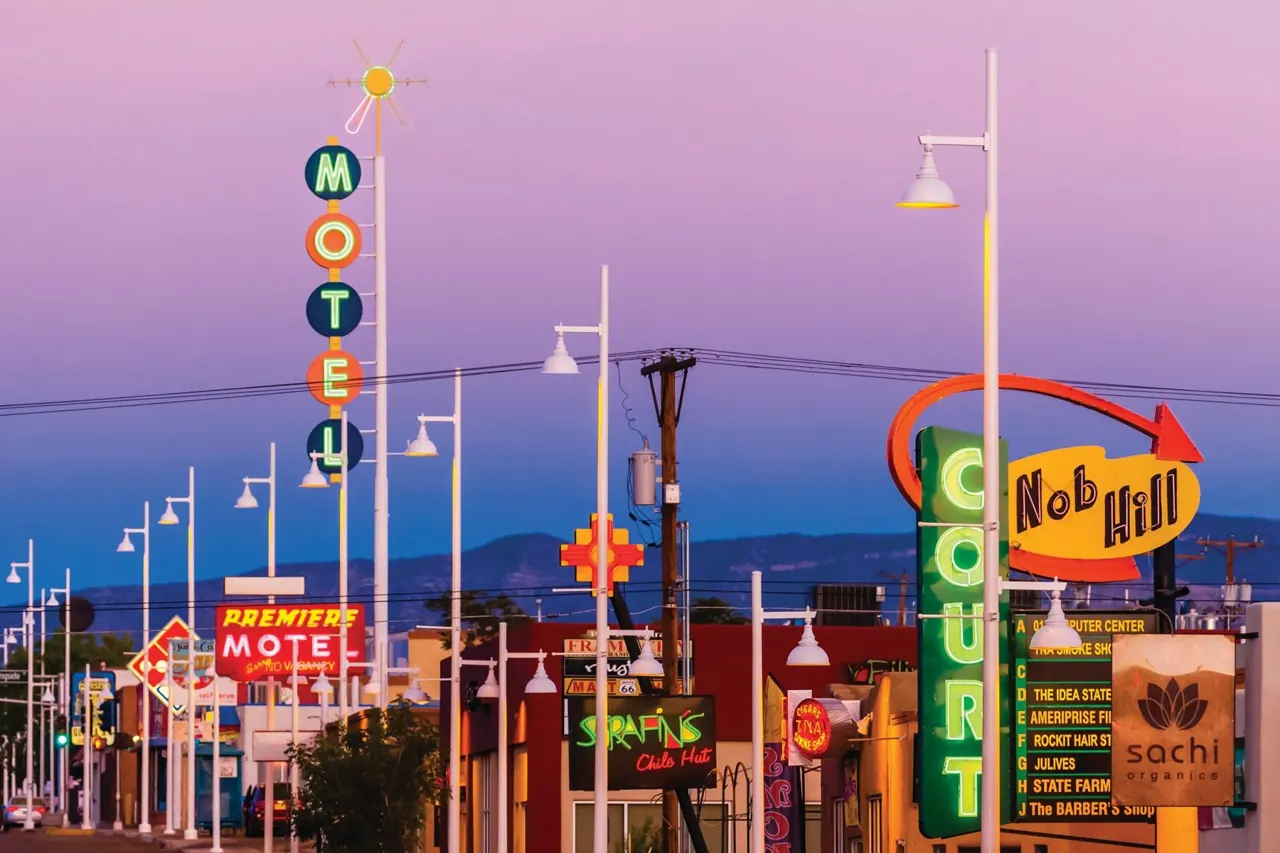
Neon signs, diners, and shops on Central Ave (Route 66), the heart of Albuquerque's Route 66 heritage.
Nob Hill took shape between about 1925 and 1950 on the mesa east of the University of New Mexico. Developer D.K.B. Sellers named it after the San Francisco neighborhood, and growth along Central Avenue picked up after 1937, when Central Avenue was designated as Route 66. In 1947 Robert Waggoman built the Nob Hill Business Center at Central and Carlisle, the city's first modern shopping center, which skeptics called Waggoman's Folly for being so far from downtown. Other survivors of the highway years include the 1938 Lobo Theater, the 1939 Jones Motor Company building and the Monte Vista Fire Station.
You'll find about a mile of Central Avenue lined with locally owned shops, galleries, restaurants and bars, many in buildings from the Route 66 era. Neon arches span the street at each end of the district, and older signs light up after dark. It is best explored on foot, starting around the Nob Hill Business Center and walking west toward the university.
Hours, prices and access change. Confirm with the venue before you go. Details last checked October 2026. More Route 66 stops in Albuquerque, NM.
From people who've been.
The stops on either side of this one, in driving order from Chicago to Santa Monica.
A stretch built to play "America the Beautiful" when driven over at 45 mph. The tune has been fading and may no longer play.
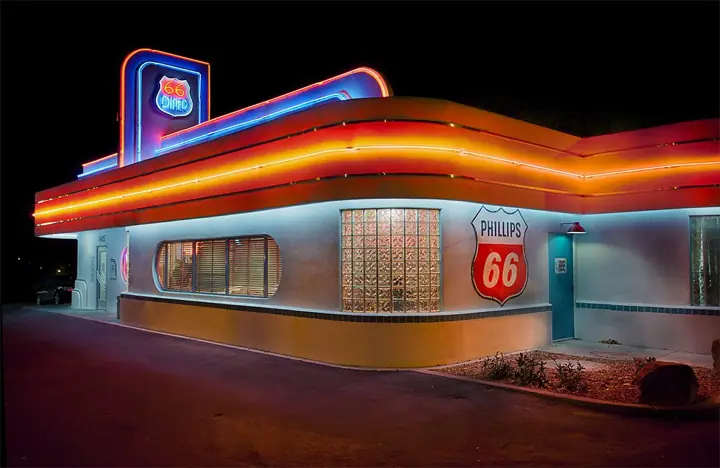
1950s-style restaurant packed with nostalgia, serving classic American fare in an authentic retro setting.
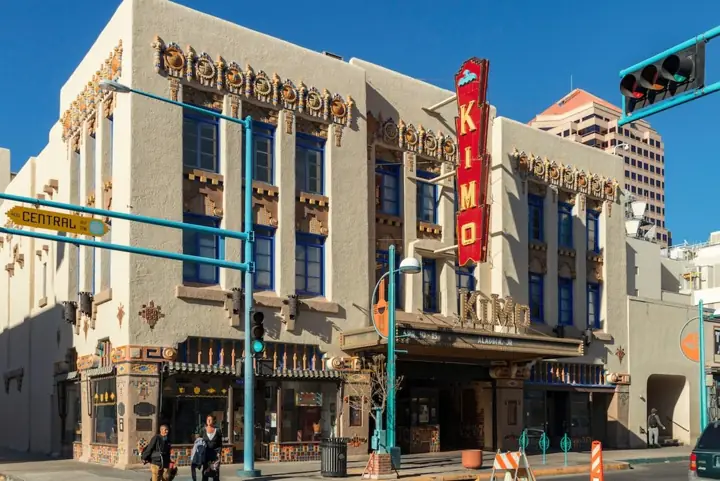
Pueblo Deco-style theater from 1927, a stunning example of Southwestern architectural design and cultural venue.
Itineraries, roadside gems, and site updates — no spam.