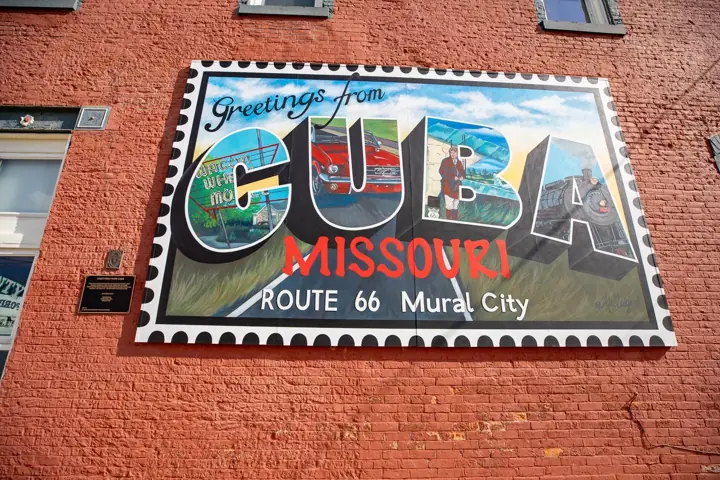
Collection of vibrant outdoor murals celebrating Route 66 history and culture throughout the city.
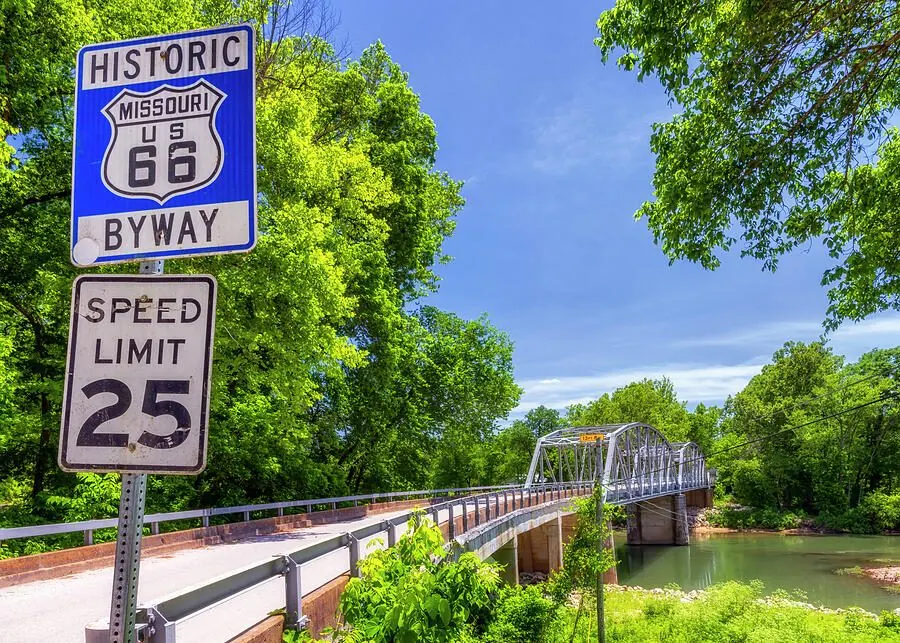
Historic bridge with dangerous curves that gave this section its treacherous reputation among early travelers.
The steel truss bridge at Devils Elbow went up in 1923 as part of Missouri Highway 14 and became Route 66 three years later. The hamlet takes its name from a hard bend in the Big Piney River where rafts of railroad ties once jammed, and lumbermen cursed it as a devil of an elbow. The narrow, twisting road through the valley was eventually replaced by a four-lane bypass through the Hooker Cut, finished in 1945, which left the old bridge to local traffic. A $1.3 million rehabilitation closed it in late 2013, and it reopened in May 2014.
You can still drive across the 588-foot span, which has a slight dogleg and is said to be the only curved Route 66 bridge still carrying traffic. From the deck and the riverbank you look out at the Big Piney and the bluffs rising above it. The tiny community around the bridge keeps an old-road feel, with the Elbow Inn nearby and river outfitters offering float trips in season.
Hours, prices and access change. Confirm with the venue before you go. Details last checked October 2026.
From people who've been.
The stops on either side of this one, in driving order from Chicago to Santa Monica.
Collection of vibrant outdoor murals celebrating Route 66 history and culture throughout the city.
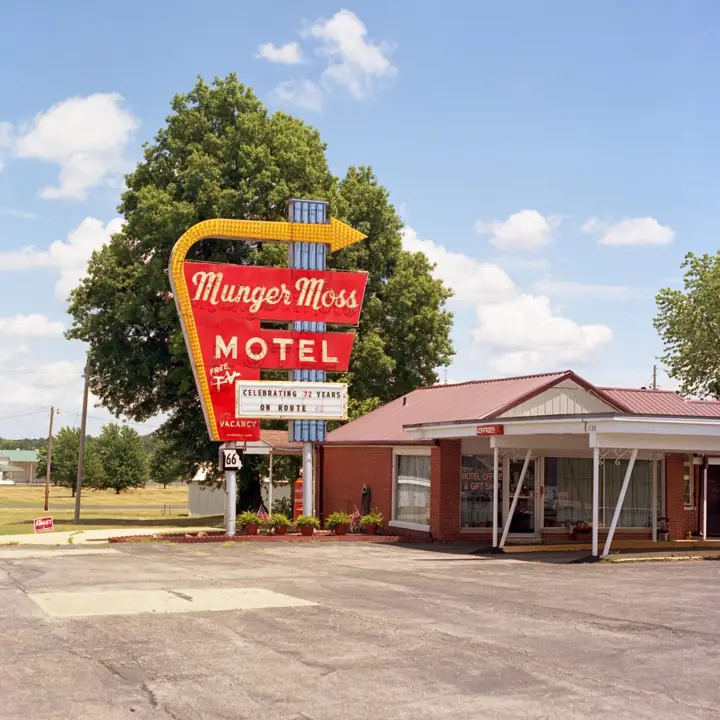
Classic Route 66 motel famous for its restored neon sign; most of the rooms are now apartments.
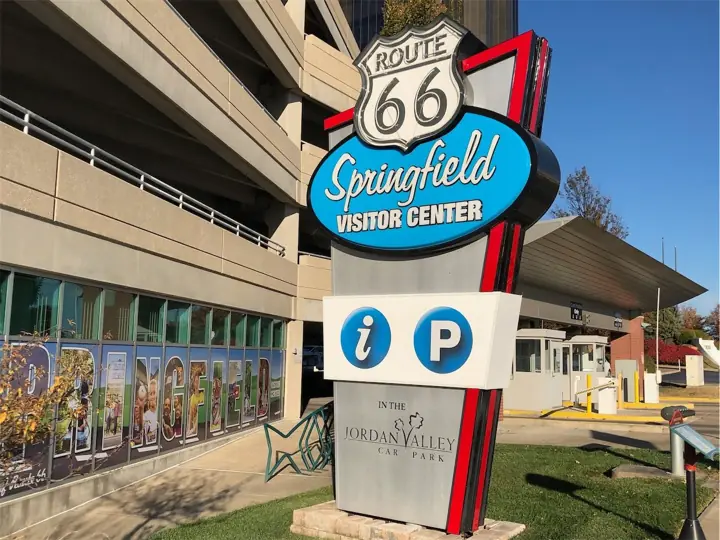
Comprehensive visitor center with Route 66 exhibits, maps, and information for travelers.
Itineraries, roadside gems, and site updates — no spam.