
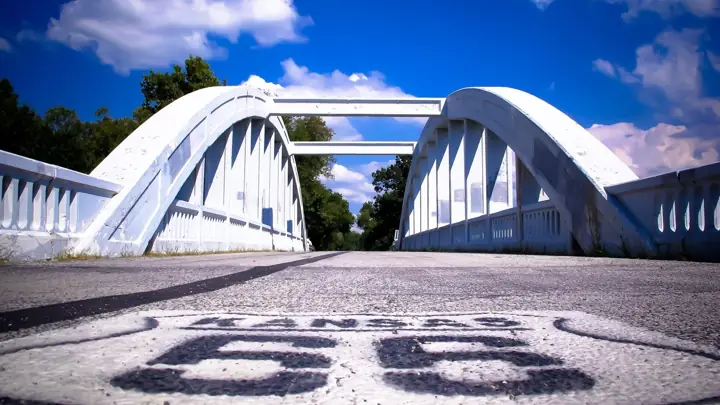
A rare one-lane concrete "Marsh Arch" bridge built in 1923. Photo op icon of Kansas Route 66.
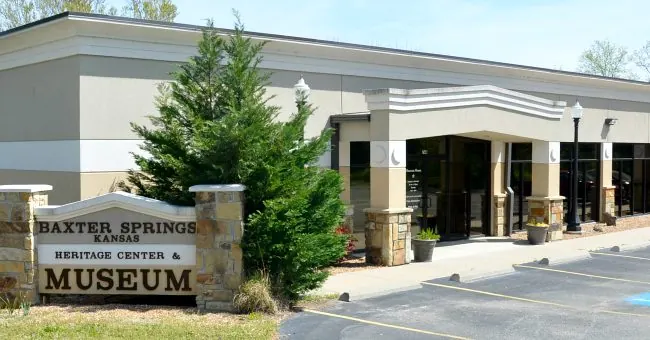
Learn about the town's role in the Civil War, Native American history, and Route 66 heritage.
Baxter Springs has a long history for a small town: Osage country, an 1863 Civil War attack on Fort Blair remembered as the Baxter Springs massacre, a wild spell as a Kansas cattle town, the Tri-State lead and zinc mining boom and then Route 66. The Baxter Springs Heritage Center and Museum, one block off the old highway, was created to hold all of it under one roof. It also keeps a research archive of photographs, oral histories and clippings on mining, early settlement and Route 66 in southeast Kansas.
Two floors of exhibits cover the Civil War and Fort Blair, recreated 1870s businesses, 1930s storefront window displays, a 1926 LaFrance fire engine, World War II and a full-size model of a lead and zinc mine. Outside are a relocated 1870s log cabin and a Korean War-era tank. The Route 66 material ties the town's story to the road. Most visitors spend about an hour, longer if local history is your interest.
Hours, prices and access change. Confirm with the venue before you go. Details last checked October 2026. More Route 66 stops in Baxter Springs, KS.
From people who've been.
The stops on either side of this one, in driving order from Chicago to Santa Monica.
A rare one-lane concrete "Marsh Arch" bridge built in 1923. Photo op icon of Kansas Route 66.
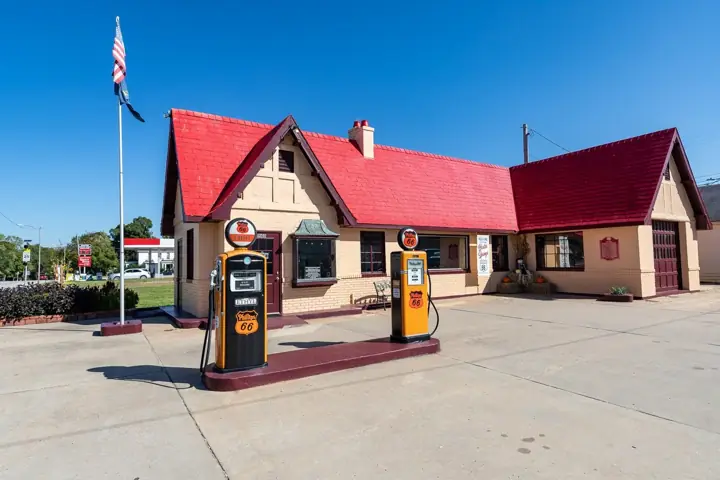
Beautifully restored 1930 station that now houses a visitor center and museum showcasing Route 66 history.
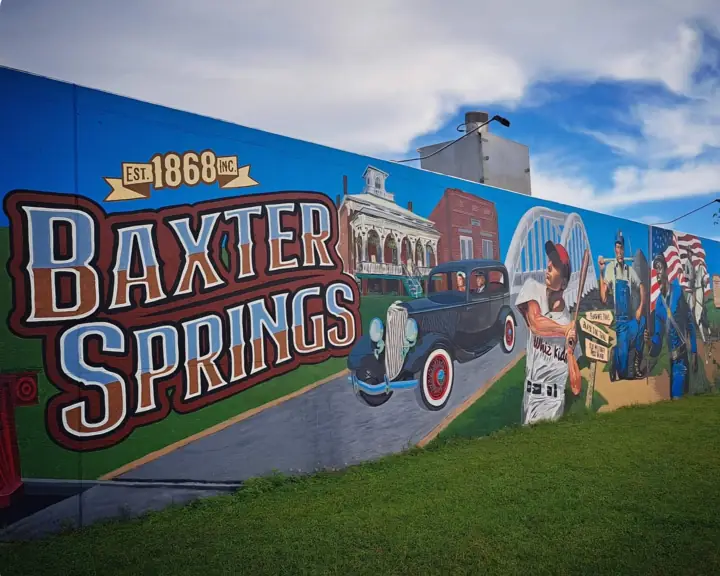
A 100-foot mural painted in 2024 on the city water works wall, tracing Baxter Springs from cowtown days to Route 66.
Itineraries, roadside gems, and site updates — no spam.